Pinellas Park, FL
Commercial Roofing in Pinellas Park, FL
Flat and low-slope commercial roofing systems and service. Honest pricing, quality workmanship, and free inspections for Pinellas Park homeowners.
GAF Certified
6 Counties
Since 2010
Warranty-Backed
We keep commercial and multi-family properties dry and code-compliant with TPO, modified bitumen, and metal systems, plus maintenance and repair programs that protect your investment and minimize downtime.
Local & Trusted
Every commercial roofing in Pinellas Park is done right and backed by our workmanship warranty. We’ve worked Pinellas County roofs since 2010.
Why Pinellas Park Homeowners Choose Tri Peak for Commercial Roofing
- TPO, modified bitumen & metal
- Re-roofs and new installs
- Maintenance & repair programs
- Minimal business disruption
Permits & Inspections in Pinellas Park
City of Pinellas Park Building Development Division (not the county) issues roofing permits for properties within Pinellas Park city limits. Office is in the Community Development Building at 6051 78th Avenue N, Pinellas Park, FL 33781 (mailing: P.O. Box 1100, Pinellas Park, FL 33780-1100). Permit counter phone: 727-369-5647, open Monday-Friday 8:00 a.m.-4:30 p.m. Permits are submitted through the city's Tyler Portico online permit portal (pinellasparkfl.tylerportico.com) or over the counter.
Roofing permit applications go through the Tyler Portico portal or the Building Development Division counter at 6051 78th Ave N. Before applying, contractors must have a current Certificate of Insurance (General Liability and Workers' Compensation) on file with the city, listing the City of Pinellas Park as certificate holder, submitted to coi@pinellaspark.gov. As with other Pinellas County municipalities under FBC 8th Edition, reroofs require a product approval submittal tying each roofing component (underlayment, shingle/tile/metal system) to its current Florida Product Approval number, and the city maintains a specific Roof Mitigation Verification - Deck Attachment form (based on Section 201 of the Florida Hurricane Mitigation Retrofit Manual) used to document deck nailing and secondary water barrier compliance on reroofs, consistent with the mitigation-inspection style used region-wide (Gulfport's neighboring nailing affidavit is a close template for the same requirement). Final roof inspection is scheduled through the same portal/permit counter; as with peer cities, expect a hold on final sign-off if the nailing/mitigation documentation isn't posted or uploaded by inspection day. Fees follow the city's Administrative Fee Schedule and are calculated on job valuation; exact fee tables and inspection scheduling cutoffs should be confirmed against the current fee schedule PDF or by calling 727-369-5647 before quoting a homeowner.
Florida Building Code & Wind Requirements
Pinellas Park, like the rest of Pinellas County, falls under the Florida Building Code 8th Edition (2023)/ASCE 7-22 wind tables with an Ultimate Design Wind Speed (Vult) of approximately 145 mph for Risk Category II structures (typical single-family homes), 135 mph for Risk Category I, 155 mph for Risk Category III, and 157 mph for Risk Category IV, with interpolation permitted between mapped contours. Pinellas Park sits inland (central Pinellas peninsula, well back from the Gulf beaches), so while the county-wide Vult figure applies, confirm whether the parcel falls inside the Wind-Borne Debris Region threshold (≥140 mph everywhere, or ≥130 mph within 1 mile of the coast) — most of Pinellas Park is comfortably within the standard WBD trigger by the county-wide 145 mph figure regardless of coastal distance. Not in the Miami-Dade/Broward HVHZ, so standard Florida Product Approval applies rather than Miami-Dade NOA. Verify the exact Vult and WBD status per parcel via the ASCE 7 Hazard Tool or the Building Development Division before publishing a specific number to a customer.
The city enforces the Florida Building Code 8th Edition (2023). Reroofs need product approval numbers documented for every system component, and nailing/deck-attachment compliance is verified through the city's Roof Mitigation Verification - Deck Attachment form referencing the Hurricane Mitigation Retrofit Manual. In this wind-borne-debris region, sealed roof deck / secondary water barrier requirements (self-adhered underlayment or taped/sealed seams) generally apply on reroofs in addition to standard underlayment, consistent with FBC 8th Ed water-intrusion provisions used across Pinellas County. Pinellas Park is NOT in the HVHZ, so Miami-Dade NOA is not required — Florida Product Approval numbers govern. Given the age of much of the city's housing stock, permitting staff will often flag mismatched or expired product approval numbers on reroof submittals, so contractors should pull current approvals rather than reusing older paperwork.
Insurance & Your Pinellas Park Roof
Florida Statute 627.7011 prohibits insurers from denying or refusing to renew a policy solely due to roof age under 15 years; for roofs 15+ years old, a certified inspection showing at least 5 years of remaining useful life (RUL) — performable by licensed contractors, home inspectors, or engineers per HB 1611 (2024) — can preserve coverage. 2026 legislation (SB 808/HB 815, effective July 1, 2026) further tightens age-based non-renewal rules, and non-renewal notices require at least 120 days' written notice. Pinellas Park's older, largely mid-century housing stock and heavy concentration of manufactured/mobile homes (Mainlands-area and other 55+ parks) put a large share of local roofs squarely in the 15+ year scrutiny zone, making wind mitigation inspections (form OIR-B1-1802, 10-45% savings on the wind premium) and the state-funded, means-tested My Safe Florida Home program (subsidizing inspections and qualifying roof/opening-protection upgrades) especially relevant selling points for this city's homeowners facing Citizens Property Insurance or shrinking private-market renewal options.
Local Roofing Conditions in Pinellas Park
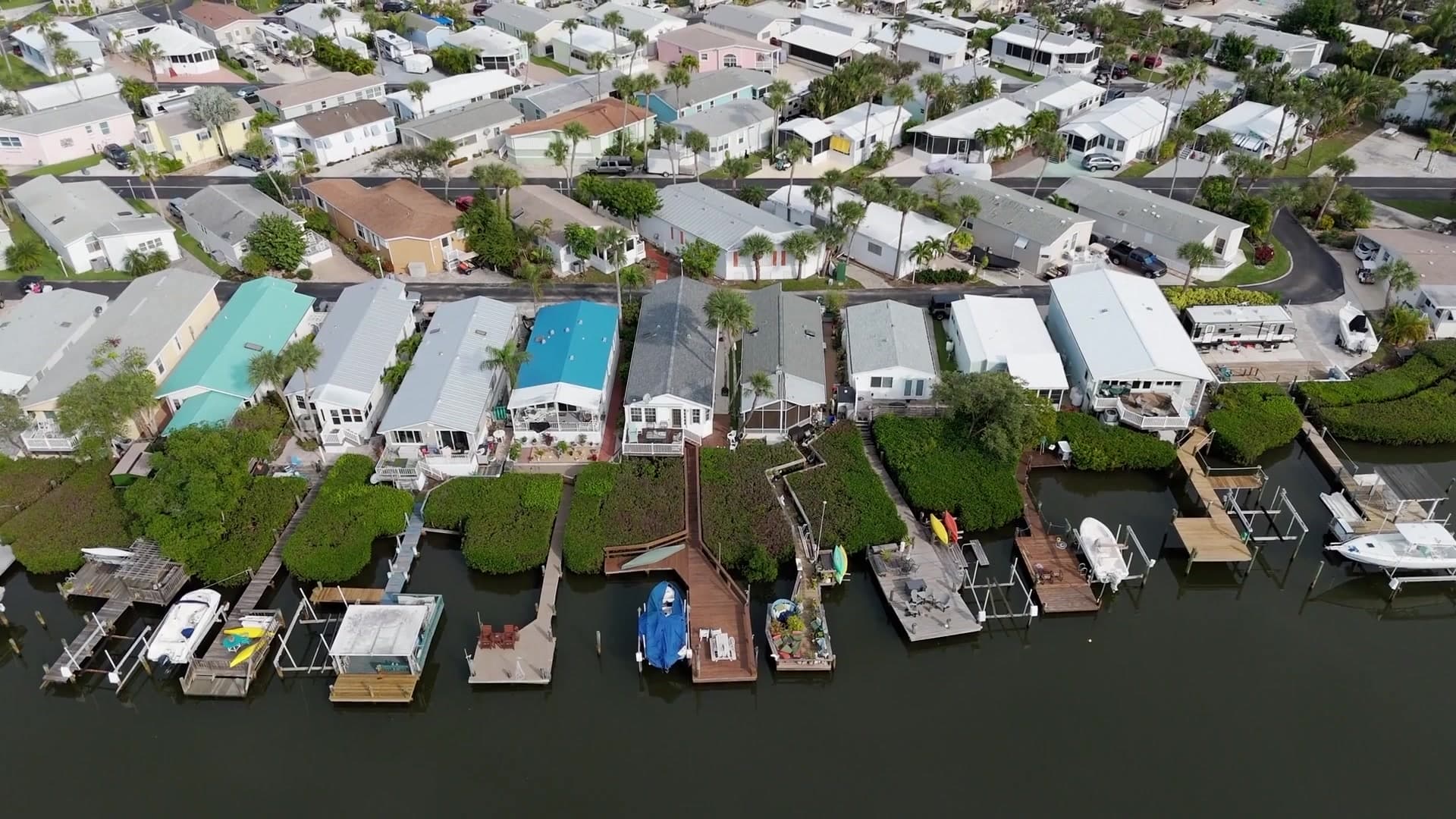
Pinellas Park is an inland central-Pinellas city (not Gulf-front like Largo, Belleair, or Indian Rocks Beach), so direct salt-spray corrosion is less severe than beachside communities, but the city still sits within a few miles of Tampa Bay and the Gulf and experiences the same humid subtropical UV load and near-daily summer convective thunderstorm pattern (June-September) plus tropical storm/hurricane exposure August-October. The mid-century concrete block housing stock means many roofs are original-era decking now facing modern nailing-schedule and secondary-water-barrier retrofit requirements on reroof, while the large 55+ manufactured/mobile-home population (Mainlands and other parks) has distinct roof-over/TPO needs, different structural load considerations, and often different insurance underwriting than stick-built homes. Mature tree canopy in the city's older established neighborhoods adds debris-load and gutter/valley-clogging considerations that factor into wind-borne-debris and drainage planning even at inland wind exposure.
HOA & Neighborhood Notes
The Mainlands of Tamarac (six separate unit associations, one of the largest 55+ deed-restricted communities in the area) enforces architectural review including roof material/color approval before reroofing, and similar resident-owned or HOA-governed 55+ manufactured-home communities (Park Royale, Sunset Palms, Golden Gate) typically require board or management approval for roof-over systems and color/material choices given the concentration of metal and TPO roof-overs in those parks. Older stick-built single-family neighborhoods outside these deed-restricted communities generally have little to no HOA oversight, so contractors should budget an extra architectural-approval step specifically for Mainlands-area and mobile-home-park jobs, not city-wide.
Neighborhoods We Serve in Pinellas Park
We install and repair roofs throughout Pinellas Park, including Mainlands of Tamarac (Units 1-6), Park Royale, Sunset Palms, Golden Gate, Pinellas Park Estates, Freedom Lake area, Kenneth City-adjacent (bordering community, separate municipality) — near Freedom Lake Park, Pinellas Park City Hall, Pinellas Trail (runs along the city's rail corridor).
Frequently Asked Questions
Do I need a permit to replace my roof in Pinellas Park?
Yes, you need a permit to replace your roof in Pinellas Park, which is issued by the City of Pinellas Park Building Development Division.
Can my insurer drop me over my roof in Pinellas Park?
Insurers cannot drop a homeowner in Pinellas Park solely due to roof age if the roof is under 15 years old, but for roofs 15 years or older, coverage can be maintained by obtaining a certified inspection showing at least five years of remaining useful life. Non-renewal notices require at least 120 days' written notice, and upcoming 2026 legislation will further tighten these age-based rules.
Do you service existing commercial roofs?
Yes — we offer repair and preventative-maintenance programs as well as full commercial re-roofs.
Do you serve all of Pinellas Park?
Yes — Tri Peak Roofing serves Pinellas Park and the surrounding Pinellas County area, including Mainlands of Tamarac (Units 1-6), Park Royale, Sunset Palms and beyond.
Ready for Commercial Roofing in Pinellas Park?
Get a free inspection from a local Tri Peak crew — photos of what we find and a written price.
Call (352) 810-4026